

Another year of infrastructure advocacy — and a pivotal year ahead
As 2025 nears its end, I want to take a moment to reflect on the incredible work we’ve accomplished together this year.
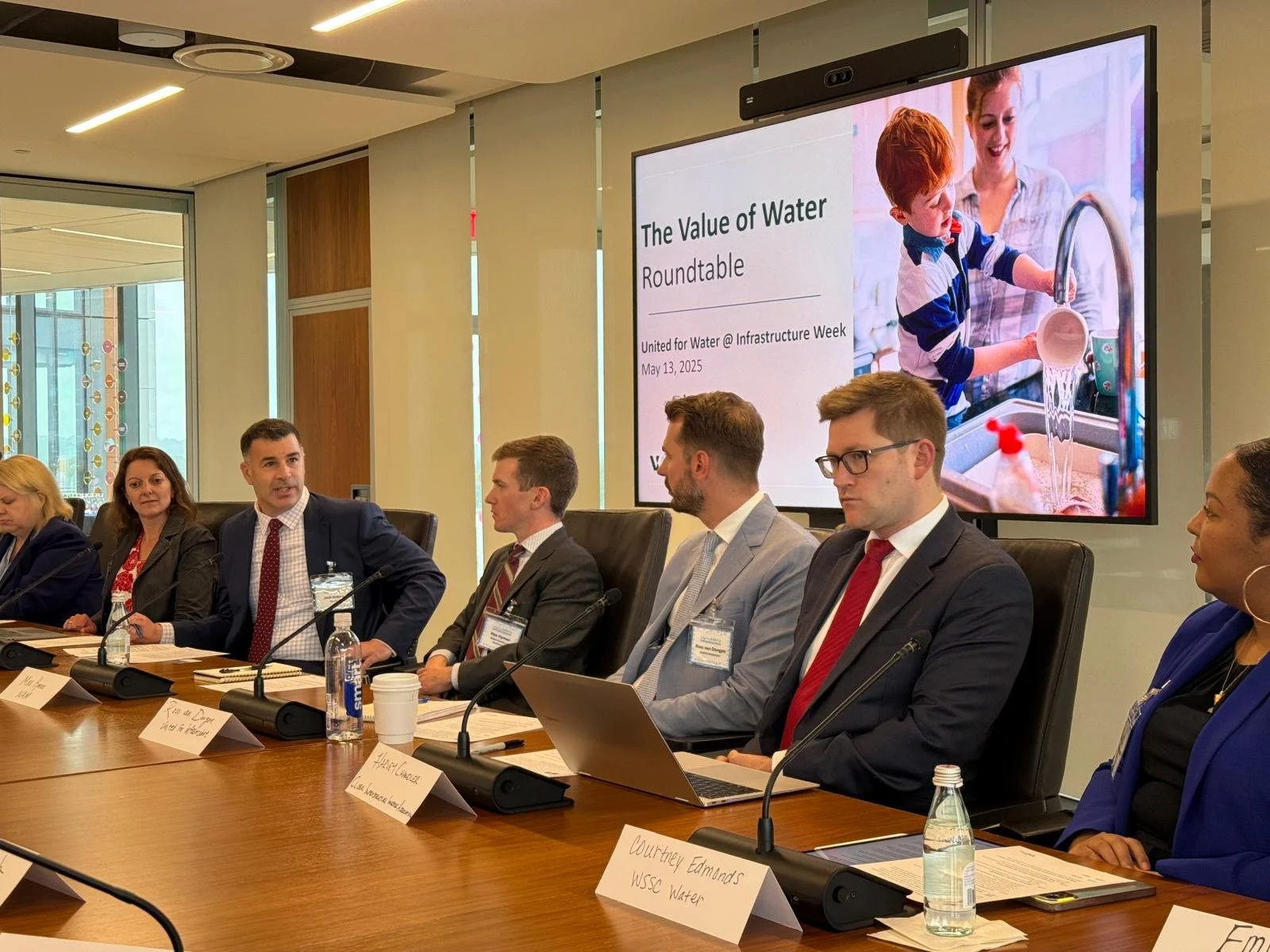
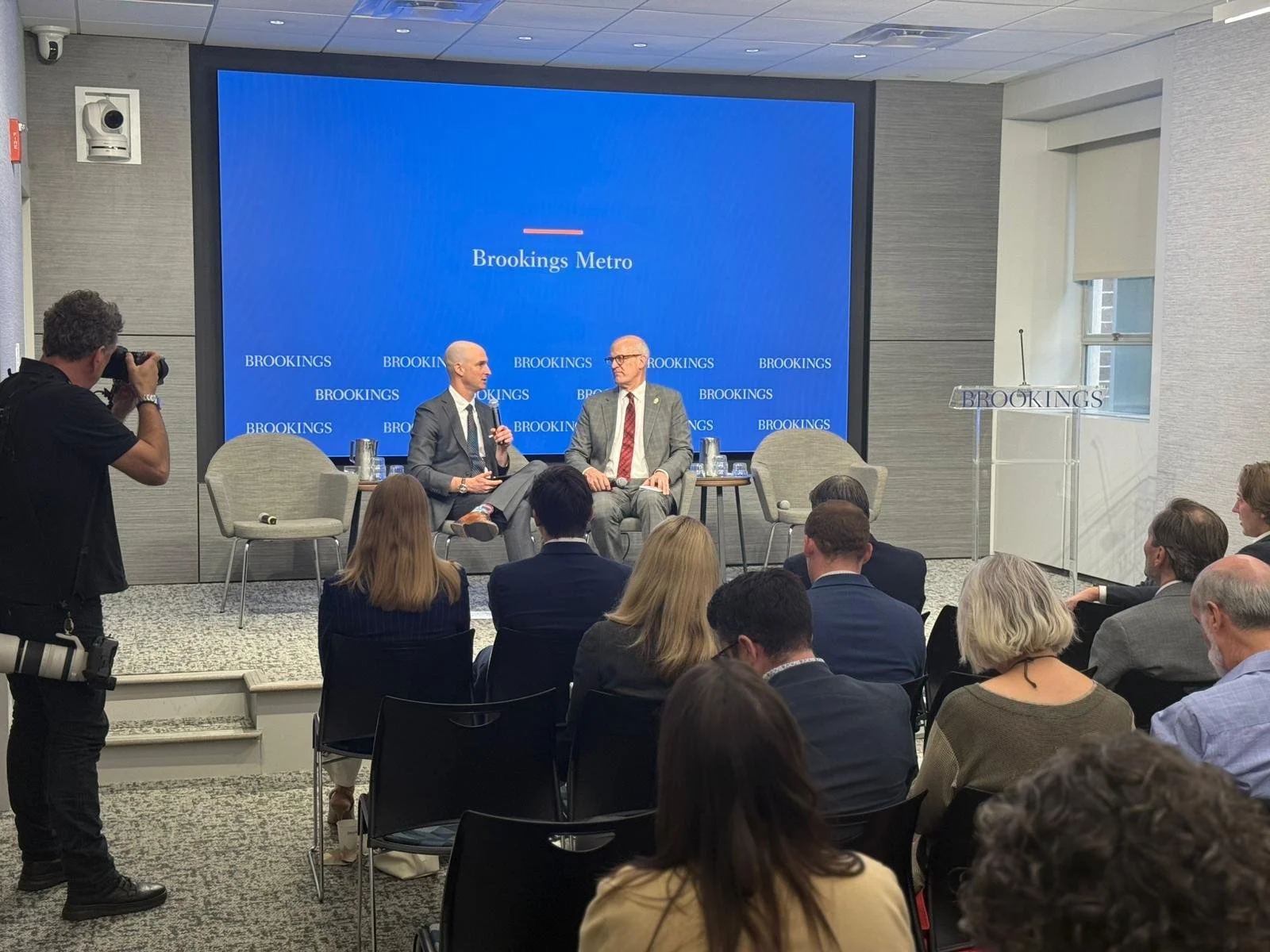
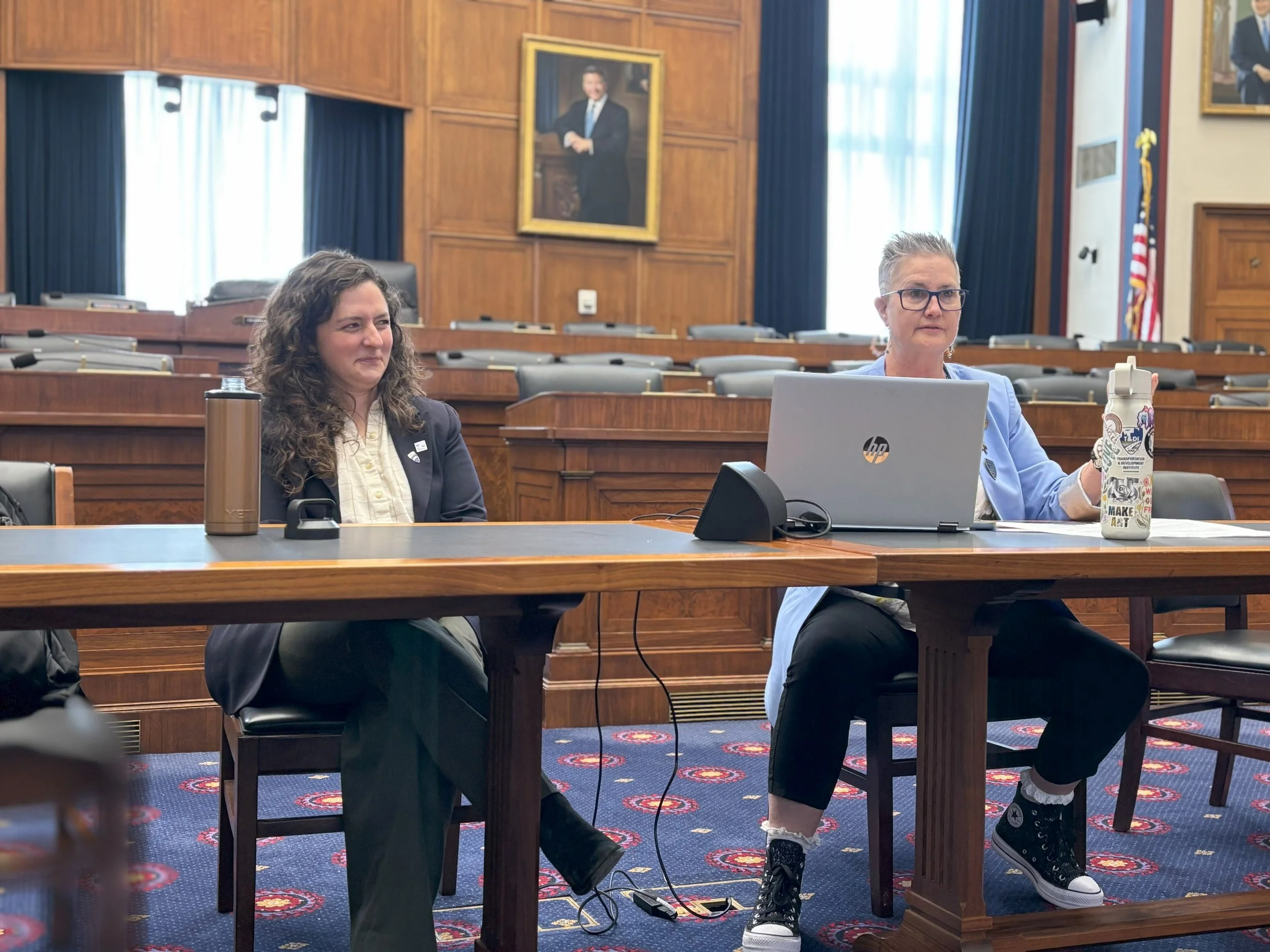
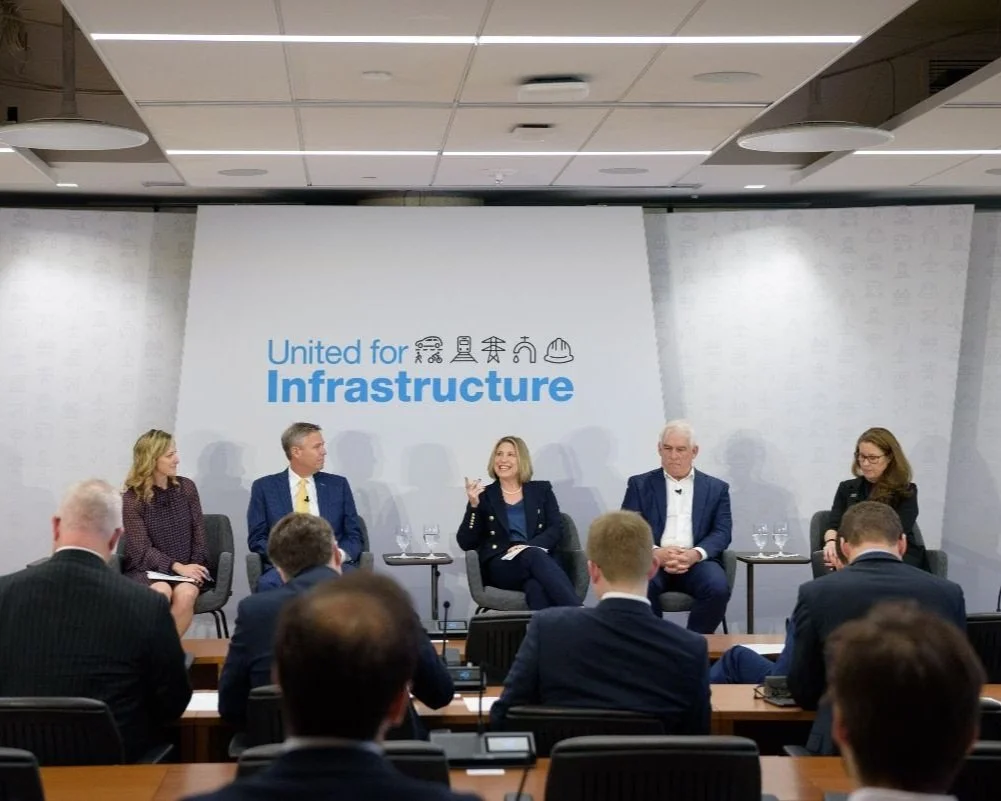
At United for Infrastructure (UFI), our mission has always been to support our partners and amplify their voices as we collectively call for robust and sustained infrastructure investment. This year, we were proud to elevate dozens of events, reports, and white papers that showcase the innovation, dedication, and leadership across our network. By shining a spotlight on these efforts and sharing stories of infrastructure needs and project successes, we ensure that infrastructure remains front and center of conversations in communities nationwide.
One of the highlights of the year was, of course, our annual Infrastructure Week featuring panel discussions, policy roundtables, and workshops. Thanks to the energy and commitment of our partners, we walked away energized by the substantive conversations around permitting reform, the role of private capital in public infrastructure, the future of State Revolving Funds, resilience, energy reliability, and the need for reliable, consistent investment to grow our economy and strengthen national security. As Sen. Shelley Moore Capito so succinctly put it: “You can't patch your way to prosperity.”



Looking ahead, 2026 promises to be a pivotal year. With new transportation funding bills on the horizon, we anticipate a busy and impactful season of advocacy, education, and action. United for Infrastructure will continue to stand alongside our partners, ensuring that your work is elevated and voices are heard in shaping the future of America’s infrastructure.
Thank you for your partnership, your passion, and your perseverance. We look forward to building on this momentum in the year ahead.
Ross van Dongen
Director | United for Infrastructure
PERMIT Act passes the House; SPEED Act vote expected this week
The U.S. House of Representatives is moving forward with promised permitting and regulatory reforms aimed at streamlining processes and limiting legal action in an effort to speed up infrastructure construction timelines and reduce costs.
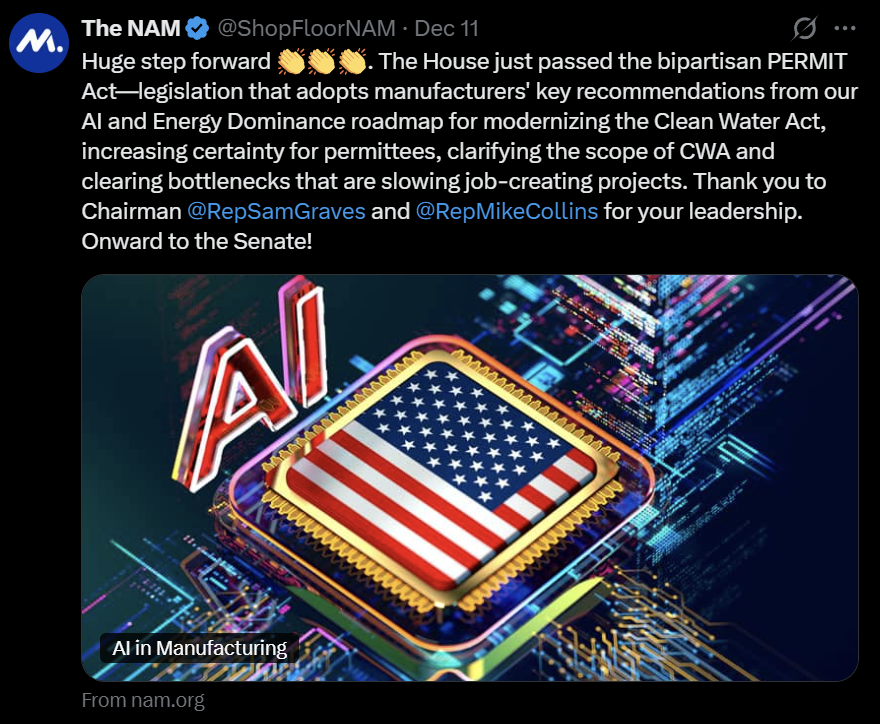
The House passed the PERMIT (Promoting Efficient Review for Modern Infrastructure Today) Act, which substantively reforms the Clean Water Act, on Thursday, December 12. The final vote was 221 to 205, mostly along party lines. Here is what a couple UFI partners had to say about the PERMIT Act passage:
National Association of Manufacturers
U.S. Chamber of Commerce
“The U.S. Chamber commends the House for passing the PERMIT Act, a critical step toward modernizing our nation's permitting processes. The legislation tackles long-standing challenges in clean water permitting by reducing costly delays that hinder the timely deployment of infrastructure and innovation needed to improve water quality in communities across the U.S. A modern, efficient permitting process enables investment, job creation, and sustained economic growth. We thank Chairmen Graves and Collins for their leadership, and urge the Senate to keep the momentum going and advance comprehensive permitting reform legislation as soon as possible.”
We’re also watching …
The Standardizing Permitting and Expediting Economic Development (SPEED) Act
The House is expected to consider additional reform legislation, the SPEED Act, sometime this week. The SPEED Act centers around reforms to the National Environmental Policy Act (NEPA), including changes to rules of compliance and the judicial review process.
The Water Resources Development Act
The House Transportation and Infrastructure Subcommittee on Water Resources and Environment will discuss priorities for the next WRDA bill at 10 a.m. on Wednesday, December 17. Witnesses will include Julie Ufner, President and CEO of the National Waterways Conference; Charles Camillo, Executive Vice President of Midwest Flood Control Association; Bryan Jones, President of HNTB’s Mid-Atlantic Division; and Noel Hacegaba, Chief Operating Officer at Port of Long Beach, California. The WRDA is a comprehensive legislative package that directs the work of the Army Corps of Engineers on projects to improve the nation’s ports and harbors, inland waterway navigation, flood and storm protection, and other aspects of our water resources infrastructure.
2025 Infrastructure Success Stories: Airports, transit, and clean water projects driving national impact
In 2025, communities across the U.S. celebrated the completion of transformative infrastructure projects that are delivering immediate, measurable benefits. Today, we are highlighting a few of these projects, from new airport terminals in Pittsburgh and Salt Lake City, to expanded light rail in Phoenix, and accelerated wastewater treatment improvements in San Diego. These investments are creating thousands of jobs, strengthening local economies, and improving quality of life.
Increasing mobility
In June, Phoenix opened its new $1.34 billion, 5.5-mile light rail expansion. Funded with federal grants and dollars from Phoenix Transportation 2050 and regional Proposition 400, the project created over 5,000 local jobs and added eight new stations, a park-and-ride facility, and a downtown transit hub. It also included community enhancements such as pedestrian pathways, comprehensive utility upgrades, more than 500 new trees, and bike lanes.
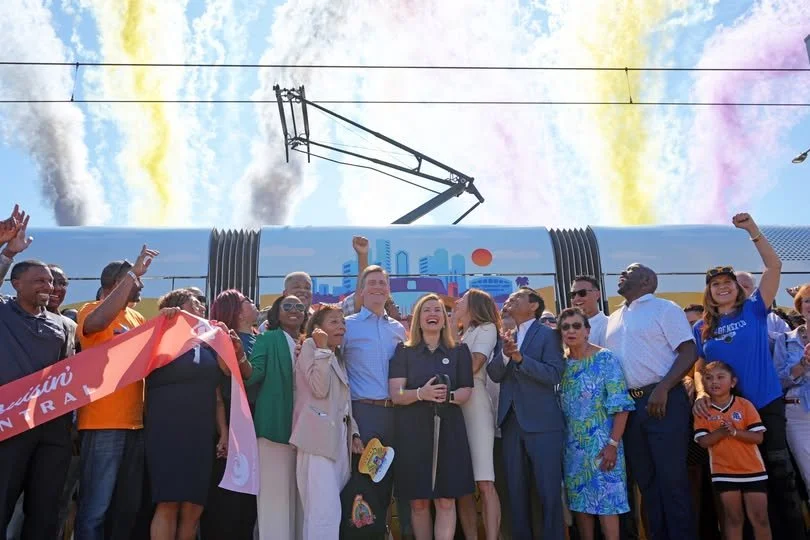
Phoenix Mayor Kate Gallego and transit and community leaders celebrate the light rail expansion. | Courtesy of Mayor Gallego
At the time of its opening, the transit authority Valley Metro predicted the expansion would add 8,000 riders per day to the 35-mile light rail system. According to the most recently available data, the number of boardings rose 16%, an increase of more than 500,000 boardings, from September 2024 to September 2025.
Building air capacity
Airports across the country have received much-needed upgrades and expansions to accommodate growing numbers of travelers. On November 18, Pittsburgh International Airport officially opened a new $1.7 billion terminal. Airport authorities said the new terminal will allow them to process 15 million travelers annually and reduce time spent navigating the airport. Overall, the project generated $2.5 billion in economic impact and created more than 14,000 jobs.
The Salt Lake City International Airport completed 10 new gates, six additional concessions, and two new lounges in October as part of the airport's ongoing The New SLC redevelopment program. The $5.1 billion initiative is scheduled to conclude construction in October 2026, after 12 years of work, bringing the total number of aircraft gates to 94. The airport aims to achieve LEED Gold Certification.
Creating safer, healthier waterways
In May, authorities completed a 10 million-gallon-per-day expansion to the South Bay International Wastewater Treatment Plant in San Diego. Originally expected to take two years, the project was completed in 100 days. The Trump Administration announced an agreement in late October with the Mexican government to fast-track additional infrastructure improvement projects to clean the Tijuana River Valley.
For decades, the overflow of untreated sewage has polluted beaches and posed serious public health risks. Recent investments are working to reduce the amount of wastewater flowing into the Tijuana River and eliminate related odors.
As we close out the year, we encourage others to share more stories of 2025 infrastructure successes and tag United for Infrastructure on X and LinkedIn.
STAY CONNECTED!
Be an advocate for the value of investments in our nation's infrastructure by amplifying UFI within your network! Follow us on X and LinkedIn for infrastructure-related news, updates, and information from our esteemed Steering Committee and valued Partnership Network.
Got a story we should know about? Has your infrastructure project or initiative been in the news lately? Help us amplify it by tagging us: @United4infra or #UnitedForInfrastructure.